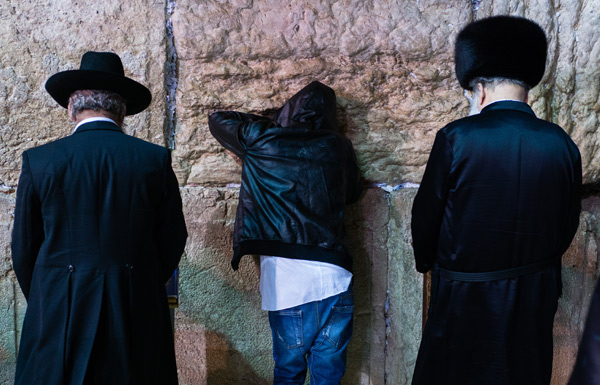
Yom Kippur and Jesus: How the Day of Atonement Points to Our Messiah
Steven Ger
24 September 2026
Yom Kippur and Jesus: How the Day of Atonement Points to Our Messiah
Every year, the Jewish Day of Atonement (Yom Kippur) raises one of the most important questions a person can ask: on what basis does God forgive sin? The answer found in Scripture is more complete, more personal, and more permanent than most people realize.
What Is the Day of Atonement?
Yom Kippur is not just a Jewish holiday. According to Leviticus 23, God Himself called these appointed times “My fixed times.” They belong to the Lord. Yom Kippur falls on the tenth day of the seventh month, exactly ten days after Rosh Hashanah, the Feast of Trumpets.
It is described in Scripture as a “Shabbat Shabbaton,” a Sabbath of Sabbaths. A super Sabbath. On this day, the people were to deny themselves, fast, and do no work. The purpose was national confession and atonement for all sins not yet covered throughout the previous year.
What Does “Atonement” Actually Mean?
The Hebrew word is “Kippurim,” which means covering. Not removal. Covering.
Think of it this way: Yom Kippur functioned like an annual spring cleaning where God swept Israel’s sins under a great holy carpet. The dirt was hidden, but it was still there. The slate was reset to zero, but only temporarily. Because as soon as the day ended, people sinned again, and the daily sacrifices resumed the very next morning.
This is a critical distinction. The Levitical system was never designed to permanently erase sin. It was a covering, repeated year after year, pointing forward to something greater.
Why Is Blood so Central to Atonement?
Leviticus 17:11 is one of the most important verses in the entire Hebrew Bible. It sits at the very center of the book of Leviticus for a reason:
“For the life of the flesh is in the blood, and I have given it to you for making atonement for your lives on the altar, for as life, it is the blood that makes atonement.” - Leviticus 17:11
Without blood, there is no atonement. This is not a minor detail. It is the foundation of the entire Levitical sacrificial system. God established this principle because sin creates real guilt, and real guilt requires a real solution.
What Happened During the Yom Kippur Ceremony?
The central figure of the day was the High Priest. He would remove his ornate priestly robes and dress in simple white linen. He was the representative of the entire nation, and the weight of Israel’s atonement rested on his shoulders.
The ceremony involved several key moments:
- The High Priest first sacrificed a bull for himself and his fellow priests. He could not represent the people before God until His own sin was addressed.
- He entered the Holy of Holies, the innermost room of the temple, three times throughout the day. This was the only day of the year this was permitted.
- Two identical goats were brought forward. Lots were cast to determine the fate of each.
- One goat was sacrificed as a sin offering for the people.
- The second goat, the scapegoat, had the sins of Israel symbolically transferred onto it by the High Priest. It was then led into the wilderness and pushed off a cliff to ensure it could never return.
A crimson thread was tied to the temple door each year. According to well-documented rabbinic writings, when the scapegoat went over the cliff, that red thread would miraculously turn white, signaling that Israel’s sins had been forgiven.
What Happened to the Red Thread 40 Years Before the Temple Was Destroyed?
This is where history becomes deeply significant. For 40 consecutive years before the temple was destroyed in 70 AD, that red thread refused to turn white. It stubbornly remained red, year after year, a silent and sobering witness that something had changed.
Count back 40 years from 70 AD and you land in 30 AD, the very year Yeshua began His ministry. His message was clear: “Repent, for the kingdom of God is at hand.”
God was giving Israel a quiet but powerful sign that the old system was no longer sufficient, and that a greater atonement had arrived.
How Does Modern Judaism Seek Forgiveness Without the Temple?
The temple was destroyed in 70 AD, and with it, the sacrificial system ended. Since then, Jewish tradition has developed other means of seeking atonement. The most well-known formula comes from the ancient Unetaneh Tokef prayer, which states that repentance, prayer, and righteousness avert the severe decree.
Rabbinic sources also point to five possible bases on which God might forgive:
- the merit of the shofar being blown correctly
- God manipulating the scales of sin and righteousness
- the merit of the Torah’s existence
- the stored-up merit of the patriarchs, especially Isaac
- individual or communal obedience to Torah
Yet even within the Yom Kippur prayer book, the Machzor, there is a striking admission. The liturgy confesses: “There is no righteous advocate to plead against the witness of transgression.” No defense attorney. The worshipper stands alone before God, appealing to His mercy with no one to speak on their behalf.
What Does the New Testament Say about a Righteous Advocate?
1 John 2 reads almost as if it was written directly in response to that confession. It answers the very problem the liturgy admits it cannot solve.
“If anyone sins, we have an advocate with the Father, Jesus Christ the righteous. And He Himself is the propitiation for our sins.” - 1 John 2:1-2
Notice what this passage provides that the rabbinic system cannot:
- An advocate exists. There is a righteous defender.
- That advocate is the Messiah, Yeshua Himself.
- He is perfectly righteous, fully qualified to represent us.
- He is not just the lawyer. He is also the basis of the defense, because He Himself is the atonement.
He is already with the Father. You do not have to send for Him. He is present, interceding continually.
How Is Jesus the Fulfillment of Yom Kippur?
The book of Hebrews unpacks this in detail. Two truths emerge clearly.
Yeshua Is God”s Perfect High Priest
Every High Priest in the Levitical system eventually died. Each one had to first atone for his own sins before he could represent the people. Each one was temporary.
Yeshua is different. Because He lives forever, He holds His priesthood permanently. He always lives to make intercession. He does not need to atone for Himself because He is without sin. And His work does not need to be repeated annually. It was done once, completely, and it holds forever.
Yeshua Is God’s Perfect Sacrifice
If the Levitical sacrifices had truly been sufficient to cleanse sin, they would only have needed to happen once. The fact that they were repeated every single year is itself evidence of their inadequacy. They covered sin. They did not remove it.
Yeshua’s sacrifice does not cover sin. It eradicates it. His redemption is eternal. The annual cycle has been permanently broken because the problem has been permanently solved.
What Does This Mean for Us Today?
When God weighs our lives, all of us fall short. As Scripture says, all have sinned and fallen short of the glory of God. Our wickedness, honestly measured, will always outweigh our righteousness.
But for those who have placed their trust in Yeshua, God takes the righteousness of His Son and places it on the scale on our behalf. That righteousness so far outweighs our sin that the case is closed. Not because of our merits, not because of ancestral merit, not because of creative theological accounting, but because of the finished work of our Messiah.
Remember what Abraham said to Isaac when the boy asked where the lamb was for the offering: “God will provide the lamb for the burnt offering, my son.” - Genesis 22:8
God Himself supplied the answer to Israel's predicament. He always intended to.
Life Application
This week, take time to reflect on the basis of your confidence before God. Not your performance, not your good intentions, not your religious activity, but the finished work of Yeshua on your behalf. If you have trusted Him, draw near to God with confidence, not fear, because His throne is a throne of grace.
If you have not yet placed your trust in Yeshua, consider this: the gates of repentance are always open through Him. You do not need to wait for a holy day. You do not need to earn your way in. You need only come to the One who is both your advocate and your atonement.
Ask yourself these questions this week:
- Am I drawing near to God with confidence, or am I still trying to earn my standing before Him through my own efforts?
- Do I truly understand that my forgiveness rests on the righteousness of Yeshua, not my own?
- Is there someone in my life, perhaps a Jewish friend or family member, who is still searching for atonement without knowing the Messiah? How might I gently and lovingly share what I know?
To err is human. To forgive is divine. And God has made a way for that forgiveness to reach us completely, permanently, and personally through Yeshua HaMashiach, Jesus the Christ, our great High Priest.