Rosh Hashanah, Judgment, and the Advocate We All Need
Steven Ger
24 September 2026
The Feast of Trumpets, known in Jewish tradition as Rosh Hashanah, is one of the most solemn and significant days on the biblical calendar. It raises questions that every person, regardless of background, must eventually face: How will God judge me? What happens when my life is weighed in the balance? And is there any hope?
What Is the Feast of Trumpets?
The Feast of Trumpets is introduced in Leviticus 23:24, where God instructs Moses: “In the seventh month, on the first day of the month, you shall have a Sabbath, a memorial of blowing of trumpets, a holy convocation.”
The passage is intentionally brief. It tells us to treat the day like a Sabbath, to blow something (traditionally the shofar), to bring offerings, and to hold a memorial. What the memorial is for? The text does not say. It is, in many ways, a biblical mystery.
Because the Torah leaves so much unsaid, Jewish rabbis over the centuries filled in the gaps with rich tradition and theology. The result is a holiday layered with meaning about judgment, repentance, and the mercy of God.
Why Do Jewish People Call this Day “The Day of Judgment”?
Rabbinical tradition gave this holiday several names. One is Rosh Hashanah, meaning “head of the year,” treating it as a New Year celebration tied to the anniversary of creation. Another name is Yom HaDin, the Day of Judgment. A third is Yom HaZikaron, the Day of Remembrance.
According to Jewish theology, three books are opened in heaven on this day. One is the Book of Life for the completely righteous. One is a book of death for the thoroughly wicked. And a third is for everyone in between, which is where most people are assumed to fall.
The Talmud puts it plainly: “Three books are opened on Rosh Hashanah before the Holy One. One for the wholly wicked, one for the wholly righteous, and one for the middling people.”
The names of the righteous are immediately sealed for life. The names of the wicked are immediately sealed for death. But the vast majority, those in the middle, have their fate left suspended until Yom Kippur, ten days later.
What Are the Ten Days of Awe?
The ten days between Rosh Hashanah and Yom Kippur are called the Days of Awe. During this period, Jewish people believe their fate literally hangs in the balance. The judgment written in pencil on Rosh Hashanah is sealed in permanent ink on Yom Kippur.
This creates an intense season of self-examination. Every deed during those ten days carries weight. Every act of kindness, every prayer, every moment of genuine repentance could tip the scales.
An ancient prayer from the Jewish liturgy captures the weight of this season:
“Who shall live and who shall die? Who shall reach the end of his days and who shall not? Who shall perish by fire and who by water? Who by sword and who by wild beast?”
The prayer continues with a powerful but sobering conclusion: repentance, prayer, and righteous deeds avert the severe decree.
What Is the Formula for Averting God’s Judgment in Jewish Tradition?
The three tools given to the Jewish people during this season are:
- teshuvah (repentance): A genuine ethical turn, a change of mind that leads to changed behavior.
- tefillah (prayer): Crying out to God with sincerity.
- tzedakah (righteous deeds and charity): Acts of goodness done with right intention.
Together, these three are said to deflect the severe decree. Like a shield that turns away what would otherwise strike you, repentance, prayer, and good deeds are the Jewish person’s defense before God.
But here is the tension. The more honest a person is about their own sin, the harder it becomes to feel confident that their good deeds are enough. The scales of justice are real, and the weight of a year’s worth of failures is heavy.
What Does the Jewish Prayer Book Confess about Having no Advocate?
One of the most striking lines repeated throughout the Machzor, the prayer book used during these High Holy Days, is this:
”There is no righteous advocate to plead against the witness of transgression.”
In the imagery of the heavenly courtroom, God is the judge. The accuser presents every sin committed throughout the year. And the person standing before God has no defense attorney. No advocate. No one to plead their case.
That is a desperate place to stand.
What Does the Bible Say about Having an Advocate before God?
This is exactly where the New Testament speaks directly into the heart of this holiday. The apostle John writes:
”If anyone sins, we have an Advocate with the Father, Jesus Christ the righteous.” – 1 John 2:1
Where the Machzor confesses there is no righteous advocate, the New Testament declares there is one. His name is Yeshua, Jesus, the Messiah. And He does not advocate based on our good behavior. He advocates based on His own righteousness and His atoning sacrifice.
John continues: “He Himself is the propitiation for our sins, and not for ours only but also for the sins of the whole world.” (1 John 2:2)
He is the satisfaction. He is the covering. He is sufficient to balance the scales that our own deeds never could.
How Does the Story of Isaac Connect to Jesus?
The binding of Isaac, known as the Akedah, is read during Rosh Hashanah services. In Genesis 22, God commanded Abraham to offer His son Isaac as a sacrifice. At the last moment, God provided a ram caught in a thicket as a substitute. Isaac was spared. The ram died in his place.
Jewish tradition has long looked to this story as a source of hope, praying that God would remember Isaac’s willingness and apply that merit to His descendants. But Isaac was not actually sacrificed. He almost gave his life, but a substitute was found for him.
The story points forward to something greater. Another Father commanded His Son to lay down His life. That Son said yes. And unlike Isaac, there was no suitable substitute found for Him, because He was the substitute. He was the ram in the thicket for all of humanity.
It is not the merit of Abraham, Isaac, or Jacob that saves us. There is only one whose merit is sufficient. That is Yeshua, Jesus, the Messiah, the One God appointed to save us.
What Does the Shofar Have to Do with Prophecy?
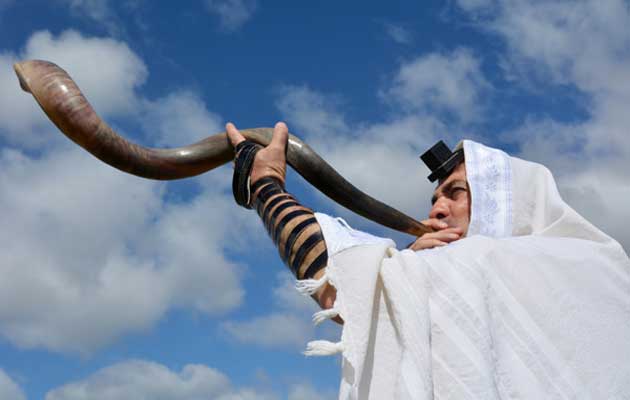
The blowing of the shofar throughout Rosh Hashanah is not just a tradition. It carries prophetic weight. Paul writes in 1 Corinthians 15:51-52:
”We will not all sleep, but we will all be changed, in a moment, in the twinkling of an eye, at the last trumpet.”
At the end of Rosh Hashanah, after one hundred blasts of the shofar throughout the day, the final blast is sounded. It is called the Tekiah Gedolah, the Great Trumpet. This imagery echoes through the New Testament as a picture of the resurrection and return of Christ.
The holiday also points to the regathering of Israel. Isaiah 27 speaks of a great trumpet being blown and Israel being gathered. Matthew 24 describes angels gathering God’s elect from the four winds at the sound of a great trumpet. The shofar is not just a sound. It is a signal of things to come.
How Should We Think about God’s Judgment?
The world often says “don’t judge me,” yet judgment is something every human being practices constantly. More importantly, it is something God does not merely practice but is responsible for. His judgment is inevitable and it is based on our behavior.
As Paul writes: “For all have sinned and fall short of the glory of God.” (Romans 3:23)
The question is not whether we will be judged. The question is what we are trusting in when that moment comes. Will it be optimism? Will it be the hope that our good deeds outweigh our bad ones? Or will it be the righteousness of the One who lived perfectly and died on our behalf?
When the scales of a life are weighed, our righteousness will never outweigh our failures on its own. But the righteousness of Christ, laid upon the scale on our behalf, changes everything. Case closed.
Life Application
This week, take time to do what Rosh Hashanah calls every person to do: examine your life honestly. Not with the anxiety of someone who has no advocate, but with the honesty of someone who does. You have an Advocate before the Father. His name is Jesus. Because of Him, you do not have to wonder whether your good deeds are enough.
The challenge this week is to practice genuine teshuvah, a real turning. Identify one area of your life where your actions have not matched your beliefs. Bring it before God in honest prayer, trust in the forgiveness made available through Christ, and take one concrete step toward change.
Ask yourself:
- If my life were weighed in the balance today, what am I actually trusting in to make me right before God?
- Am I living with the confidence that comes from having an Advocate, or am I carrying guilt and anxiety that Christ already paid for?
- Is there an area of my life where I need to turn around, not to earn God’s favor, but in response to the grace He has already shown me?
The good news of Rosh Hashanah, seen through the lens of the New Testament, is this: you do not have to defend yourself. You have an Advocate who is righteous, and He has already spoken on your behalf.